Cottage Food Label Template: What to Include (2026)
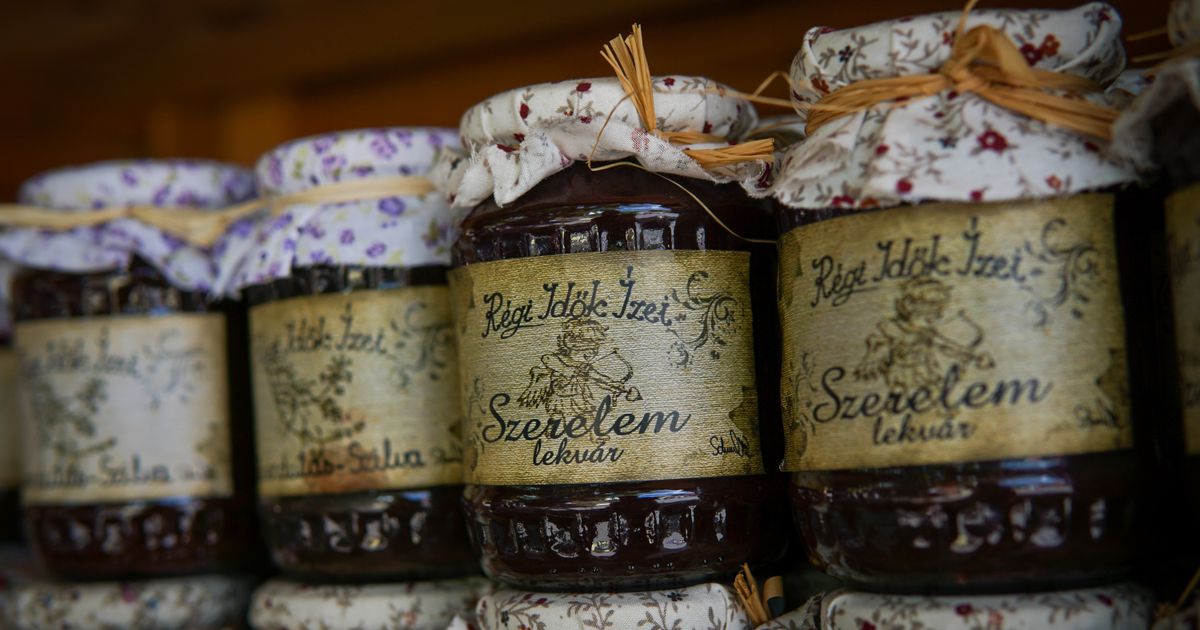
Every state now has some form of cottage food law, but there's no single federal cottage food label template you can copy and trust everywhere. What follows is the checklist of elements that show up on nearly every state's requirements, plus the state-specific caps and rules that are genuinely shifting right now. That's proof a template you saved a year ago might already be out of date.
- A handful of label elements (producer details, product name, ingredients, net weight, allergens, disclosure) appear on almost every state's cottage food requirements.
- The exact disclosure wording and required type size vary by state, so always verify your own state's text rather than copying a generic one.
- Texas raised its cottage food sales cap to $150,000/year under a law effective September 2025.
- Michigan doubled its cap to $50,000/year and newly allows online and delivery sales, effective March 2026.
- More changes are already in the pipeline for Virginia, West Virginia and Maryland through 2026.
What must every cottage food label include, regardless of state?
Cottage food laws vary enormously in the details: sales caps, permitted foods, inspection rules. But the label elements they require converge on a similar core list almost everywhere. Think of this as the cottage food label template's common backbone, the part you can plan around before checking your specific state's exact wording.
1. Business name and address
Your name (or your registered business name) and your address, so a regulator or a customer can trace the product back to a real producer. Some states accept a city and state without a full street address; others want the complete address printed. This is one of the details worth double-checking against your state's rules before you order packaging.
2. Product name
A common or descriptive name for what's in the package: 'Strawberry Jam', 'Sourdough Bread', 'Oatmeal Raisin Cookies'. Vague or purely brand-driven names without a descriptive element tend to fail review.
3. Complete ingredient list
Every ingredient, listed in descending order by weight, exactly as in standard food labeling. If an ingredient is itself a mix of components, a pre-made spice blend, for instance, many states expect those sub-ingredients broken out too. For the finer detail on ingredient ordering and formatting, our guide to ingredient label requirements covers the mechanics in full.
4. Net weight or net quantity
How much is actually in the package, in a standard unit of measure. This has to reflect the real contents, not a rounded or approximate figure.
5. Allergen declaration
A 'Contains' statement covering the major allergens present: milk, eggs, fish, crustacean shellfish, tree nuts, peanuts, wheat, soybeans, and sesame, the FALCPA 'big nine'. Cottage food operations aren't exempt from allergen disclosure just because they're small; this is one of the few pieces of federal law that applies regardless of state cottage food rules.
6. A cottage food disclosure statement
Almost every state requires some version of a disclaimer along the lines of 'made in a home kitchen not inspected by [state health agency]'. This is the one element where you genuinely cannot rely on a generic template. The required wording, minimum type size, and even whether it needs to be in a specific font weight or colour contrast varies state by state, and some states are stricter about exact phrasing than others. Look up your own state's current required wording before you finalise any packaging, and don't assume a version you copied from another producer's label, even one in a neighbouring state, is legally correct for yours.
Has my state's cottage food sales cap changed recently?
Possibly, and this is exactly why a label template isn't a 'set it and forget it' document. Cottage food law is one of the more actively legislated corners of small-food regulation right now, with several states raising sales caps and loosening sales-channel restrictions through 2025 and into 2026.
Every US state now has some form of cottage food law on the books (New Jersey was the last to adopt one, in 2021), but 'has a law' doesn't mean 'has a stable law'. The caps, permitted sales channels, and permitted foods keep moving.
| State | Change | Effective date |
|---|---|---|
| Texas | SB 541 ('Food Freedom Act') raises the sales cap to $150,000/year and allows nonprofit registration | September 1, 2025 |
| Vermont | Act 42 triples the sales cap to $30,000/year | July 2025 |
| Michigan | HB 4122 raises the cap from $25,000 to $50,000/year (up to $75,000 for certain premium items) and newly permits online, mail and delivery sales | March 24, 2026 |
| Virginia | HB 402 adds internet, phone and delivery sales for cottage food operators | July 1, 2026 |
| West Virginia | SB 44 introduces further cottage food changes | June 2026 |
| Maryland | HB 535 raises the cap from $50,000 to $100,000/year | October 1, 2026 |
Verified cottage food law changes, 2025-2026
Michigan's law is a good illustration of how much a single update can change day-to-day operations. The Farm-to-Consumer Legal Defense Fund noted that the prior Michigan law 'allowed for the production and sale of non-potentially hazardous foods that do not require time or temperature control (such as most baked items) from a home kitchen', but crucially didn't permit selling online or shipping product, something the new law changes entirely. A producer who built their sales process around the old rules would need to update more than just their label once the new cap and sales channels take effect.
“Permit Virginia cottage food operators to sell their products over the internet or by phone.”
The pattern across these updates is consistent: caps are rising, and sales-channel restrictions that used to block online, phone or delivery sales are loosening. That's genuinely useful for cottage producers, but it also means a label or business plan built around an old cap can become outdated within a single legislative session. Full details on the newest changes are tracked in the National Ag Law Center's 2026 update.
Can I sell cottage food online now?
It depends entirely on your state, and this is one of the areas moving fastest. Historically, most cottage food laws restricted sales to direct, in-person transactions (farmers markets, your own doorstep, local pickup) specifically to keep oversight simple for low-risk, small-scale production. That's now changing in several states: Michigan's 2026 update and Virginia's incoming HB 402 both explicitly add online, phone or delivery sales where they weren't previously allowed. Don't assume online sales are permitted just because your state has a cottage food law at all. Check whether your specific state's law addresses sales channel restrictions, and whether that's one of the areas recently updated.
A realistic example: building a label around a moving target
Imagine a home baker in a state that recently raised its cottage food cap, currently selling banana bread and granola at two farmers markets a month. She built her label a couple of years ago using a template she found online, listing a disclosure statement copied from a blog post about a different state entirely. It technically covers the required categories (business name, ingredients, net weight), but the disclosure wording doesn't match her state's actual requirement, and now that her state permits online sales, her packaging doesn't have anything that would work for a shipped product either. None of this shows up as a problem until an inspection, a customer complaint, or a market organiser asks to see her label meets current rules. The fix isn't complicated: check her state's current requirements, update the disclosure line, and decide if she wants to add online sales now that it's an option. But it only gets found by actually checking, not by assuming the label she made once is still correct.
Common mistakes with cottage food labels
- Copying a disclosure statement from another producer or another state without verifying the exact wording your own state requires.
- Assuming a sales cap or sales-channel rule is still current: several states have raised caps or added online sales within the last year.
- Skipping the allergen 'Contains' statement, which is a federal requirement independent of state cottage food rules.
- Adding a nutrition claim (like 'low sugar' or 'high protein') without realising it triggers a full Nutrition Facts panel requirement.
- Not re-checking requirements after growing past direct farmers-market sales into wholesale or online: different rules can apply.
Do I need a Nutrition Facts panel for a cottage food product?
Usually not, thanks to the FDA's small-business exemption, but 'usually not' isn't the same as 'never', and this is a different question from what belongs in this label checklist. Our dedicated guide on whether cottage food products need a nutrition label covers exactly when the exemption applies, when it disappears, and how to build a compliant panel if you need one.
Building a compliant label without starting from scratch
If you want the fuller federal picture behind allergen declarations and ingredient formatting, our FDA nutrition label requirements guide covers the regulatory side in depth. And if budget is tight, which it usually is for a cottage food operation just getting started, our comparison of free nutrition label generators is worth a read before you commit to a paid tool.
Mealary's nutrition label generator can produce the ingredient list and allergen formatting piece of your label directly from your recipe, pulling data from USDA FoodData Central, whether or not you ultimately need a full Nutrition Facts panel. The free tier covers the analysis and a watermarked check copy, and Pro exports a clean, print-ready file.
Business name and address, a descriptive product name, a complete ingredient list in descending order by weight, net weight, an allergen 'Contains' statement, and a state-specific cottage food disclosure statement. The disclosure wording itself varies by state, so always verify your own state's exact required text.
Most cottage food producers are exempt under the FDA's small-business rule, but the exemption disappears the moment you make a nutrition claim, such as 'low sugar' or 'high protein'. See our dedicated guide on cottage food nutrition labels for the full breakdown.
Possibly. Several states have raised caps within the last year, including Texas ($150,000/year, September 2025), Vermont (tripled to $30,000/year, July 2025), and Michigan ($50,000/year, March 2026), with more changes coming in Virginia, West Virginia and Maryland through 2026. Check your state's current rules rather than relying on a figure you saw previously.
It depends on your state. Several states have recently added or expanded online, phone and delivery sales for cottage food operators, including Michigan (2026) and Virginia's incoming HB 402 (2026), but many states still restrict sales to direct, in-person transactions. Check your specific state's current sales-channel rules before assuming online sales are permitted.
Stop calculating nutrition by hand
Mealary turns any recipe into per-serving nutrition and a print-ready FDA Nutrition Facts label. It's computed from USDA FoodData Central, with the rounding and %DV done for you and every value cited to its source.